Saturday, November 24, 2018

Proper 29, Year B 2018

Grace Episcopal Church, Galveston
Gospel: John 18:33-37
25 November 2018


Every now and then, we catch glimpses of the good that God intends for our world, even in the midst of calamity. For example, I’ve noticed some stories of heroic acts of kindness embedded in news of the tragic fires in California. In northern California, what is known as the Camp Fire began in the early hours of November 8 and ripped through Butte County eventually leaving 83 people dead and 13,000 families without homes. In one story related to this fire, 33-year-old James Betts recalled his rescue thanks to the actions of a good samaritan. While Betts was desperately trying to escape the flames with 7 others on foot, a man in a pickup truck pulled up suddenly and shouted at them to climb into the truck bed. All made it to safety thanks to the kindness of a stranger who stopped to help...a person whose name they may never know. In the Kingdom of God, there is no east and west, no rich and poor, no this kind of people and that kind, and no one is left behind…. We are all one family. Sometimes, it takes a crisis to help us revert to what matters most. For a moment we see clearly that we are all related as children of God.

The late Fred Rogers, whose children’s television series, Mr. Roger’s Neighborhood, modeled kindness for a generation of children, described how his own mother would respond when she was troubled by scary news. “Look for the helpers,” she would say. When we are frightened by events we too can find some hope in the work of the first responders, in the compassion of strangers, and in the way the worst can sometimes bring out the best in people.

Folks who have been able to escape the devastating fire in Northern California are now facing the reality of a new normal. The initial needs for rescue and immediate safety have given way to the need for shelter and relief over the coming months and still later will give way to the need for rebuilding and recovery. Whether a hurricane, a flood, an earthquake, or a fire, communities face a similar set of stages following disaster. This time, we are looking at the devastation from a distance….but we know that our own community has been in the difficult aftermath of calamity. We look at what is going on in California….but looking at something is not the same as seeing. Seeing involves not only the eyes but also the mind and the heart. Seeing involves understanding and feeling the significance of what we’re looking at. Seeing brings up questions. How are we connected to others who suffer? Do we relate to them from our own experiences? Seeing brings up feelings like empathy, compassion, and a desire to help. Seeing might lead us to the Internet to find out more from sources like the Episcopal Diocese of Northern California, the Episcopal Relief and Development US Disaster Fund and the American Red Cross, among others

Today is the final Sunday of the liturgical year. It is the last Sunday after Pentecost and the day, also known as the Feast of Christ the King, when our focus is Jesus as God’s chosen leader. But just what kind of leader is Jesus and what are we to make of his kingdom? In reading from the Gospel according to John, Pilate was trying to assess just how much of a threat Jesus was to the tinderbox that was Jerusalem. Pontius Pilate was the Roman Prefect in Judea; he had final authority in his jurisdiction on matters legal, financial, and military and typically did his work from the city of Caesarea on the Mediterranean coast. But in today’s reading we see that Pilate is in Jerusalem. Pilate was in town with his soldiers because this was the festival of Passover. He was there not to worship but, rather, to see to the interests of Rome. He knew there would be a greater than usual concentration of religious zealots in town...people who longed for the days before the Roman occupation and who were looking for a messiah to lead a revolt. Tensions were high, and the last thing Pilate wanted was some Jewish nut-job fanning the flames of discontent.

To keep the peace as well as the steady stream of taxes extracted for Rome, Pilate would not hesitate to shut down any sign of sedition. He had the authority to remove the high priest, Caiaphas, and to end the Passover festival by force if necessary. He could be brutally efficient. If he needed more soldiers he could get them from their garrison in Syria. If it was going to take a bloodbath to extinguish the beginnings of an insurrection then so be it.

Now, Pilate typically did not want to get involved in Jewish religious affairs, but Caiaphas had sent Jesus to Pilate with words that surely got his attention. Caiaphas sent word that Jesus had claimed to be a king, the King of the Jews!

“Are you the King of the Jews?” Pilate asked. But, Jesus did not directly answer the question. Yet, even at his trial before Pilate, Jesus is a teacher. He takes the opportunity to describe his kingdom as being “not from this world.” As evidence, he points out that his followers did not resist his being taken prisoner. He was describing his kingdom...sooo then he must be claiming to be a king, right? “So you are a king? Pilate asks. Once again, Jesus does not answer the question directly but he uses the opportunity to teach. You are using this term “king” to describe me...but this is why I was sent into the world. The world understands a king in a political way, but if you are going to use it for me, this is what it means… It is for this that I was born, to reveal what is ultimately true. In Jesus God has pitched a tent among us in a way that joins heaven to earth and earth to heaven. Theologically, making God known to human beings is what the 2nd Person of the Trinity does. Whenever human beings come to know God...whether in a beautiful sunset, the vast expanse of interstellar space, a burning bush, the words of a prophet, or in the actions of a nameless good samaritan saving a group from fast approaching flames….whenever any person experiences being in the presence of God, being grasped by the Holy, being saved by the Divine, we say that the 2nd Person of the Trinity is at work. Christians believe that the most perfect revelation of God to humanity was in the life, death, and resurrection of Jesus of Nazareth. God may be revealed in other ways...but never before or after so completely in Jesus! This is what it means for a Christian to acknowledge Jesus as Christ the King.

So there we are. We end the Church year with the acclamation that Jesus is our King. We do not mean by the term “king” someone who vies for power to rule one political unit among others. By King, we mean the One to whom we owe everything that is meaningful in life...our creation, our preservation, and all the blessings of this life. And, above all, the One to whom we are forever indebted for the immeasurable love by which we have been saved from the power of sin and death. AMEN.



Saturday, October 27, 2018

Proper 25, Year B 2018

Trinity Episcopal Church, Galveston
Gospel: Mark 10:46-52
28 October 2018

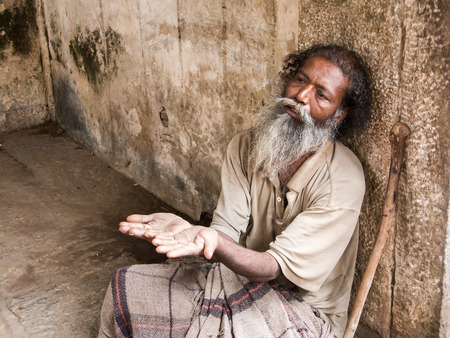
MELKOTE, INDIA - MAY 9th - An old Indian beggar waits for alms on a street corner on May 9th 2008 at Melkote, India. Stock Photo - 65902027 In today’s Gospel reading, Jesus shows God’s compassion with an act of healing. Jesus’ responds to a blind person begging from the side of the road, and this is contrasted with the hardness of heart demonstrated by many of the followers accompanying him.

This story is just “dust and ashes” unless we use it as a mirror to see ourselves. In some ways, I see myself in the crowd wanting to bypass the beggar. I’ve been in too many situations where I’ve looked the other way, walked to the other side of the street, or otherwise chosen to keep my distance when a stranger is asking for help on the street. Typically, I am suspicious; I find it difficult to trust folks soliciting at the street corners or in the parking lot at the grocery. On the other hand, there have been times in life when I related more to Bartimaeus. I remember feeling desperate after Hurricane Ike when payroll was coming due for the teachers and staff before we had re-established any kind of office at our devastated campus. The Diocese of Texas in Houston had a lot to deal with in those days, and they also found temporary office space for an anxiety-ridden head of school from Galveston. As it turned out, the Diocese agreed to front money and process the printed checks for the September payroll. Those checks going out when they did were an early sign of hope that Trinity Episcopal School had support and was going to come back!

Jesus did not meet every blind person in Palestine; that was not his agenda. Jesus' agenda on the way to the Cross was to teach those who followed him that God’s Kingdom begins in mercy. God’s compassion is real, Jesus made it known in word and deed... and ultimately, on the Cross.

There are only two basic choices in life, two ways of seeing the world, two paradigms….and these are love and fear. When we choose fear, the focus is on scarcity. When fear is in play, we are rendered blind to the abundance with which we have been blessed, and we worry about not having enough time, running out of resources, or coming up short of what we will need for self and family. When we choose love, the focus is on joy. The blessings we have received come readily to mind, and we want to pay them forward. Giving of self is a spiritual practice; it helps us connect to something greater than self. In our appointed Collect today, we pray for an increase in charity. Even though our acts of compassion, how we give of ourselves to others, may often be incomplete, distorted, misinformed, even self-serving to some extent, there is always grace in trying to follow God’s example in Jesus.

If you have watched any news lately, you have heard of the migrant caravan on route from Central America. The people are real and number in the thousands. Unicef says there are 2,300 children in this caravan. Does this modern day Exodus seem like an invasion? Do you feel that these folks are coming to take our jobs, to strain our social services, to change our way of life? Are they pawns of a political movement, on the right or on the left? The more interviews I hear, the more these people are given human faces, the greater my awareness is that they are not left or right, they just want to survive.

People in this caravan decided to leave their homeland, figuring that the danger of leaving and making the journey (even with no assurance at the end) was outstripped by the danger at home of facing gang death threats and no help from a corrupt government…. and the continuing threat of being unable to feed their families. I found it helpful to read some of the interviews of people in the migrant caravan, to see things from their perspective...to put human faces on them. These are folks who are desperate...that means, if you tell them not to come, they are still coming.

Bartimaeus believed that Jesus was God’s chosen leader and trusted that Jesus would show compassion for him. Bartimaeus cried out the words, “Jesus, Son of David, have mercy on me!” At some point in the past he had lost his eyesight, but in his spirit he could still see. He trusted that Jesus was the one sent by God to save the lost. For people who are desperate, faith is not a luxury to take or leave. For people like Bartimaeus, life had to be lived one day at a time. His very existence was dependent on the gifts of others...faith was required just to make it from one day to the next.

Perhaps, Bartimaeus knew enough from the scriptures to know that the promised Son of David would be a servant of all. Jeremiah’s vision of a restored Israel included the blind and the lame, as we heard in our Old Testament reading today….Perhaps, Mark’s Bartimaeus knew this passage. Many in the crowd berated him, telling him sternly to keep his mouth shut... But he was desperate, and he believed that Jesus would show compassion to him. So, this beggar cried out even more loudly. When someone is desperate, they don’t have a choice….no matter what others say or what kind of abuse they shell out….they will keep on.

Jesus had left Jericho, and the next stop was Jerusalem...the “train had left the station,” so to speak….but, Jesus stood still when he heard a cry for mercy. The crowd did not know this, but Jesus’ work in Jerusalem, his death on the Cross, would show God’s unqualified mercy for all humanity.

Now here is an even more remarkable thing in the story. The beggar cries out, Jesus hears him and stops, and then…. he directs the crowd to call the man. Jesus asks the very people who had been hushing Bartimaeus to now deliver good news and to bring him before Jesus. Notice, he does not wait for the perfect, blameless people to assist. Jesus needs the ones who are with him to be his hands and feet. Jesus needs us to be his hands and feet in our own time and in our own community. He is not waiting for the perfect, blameless people because, truth be told, those people do not exist. Folks, it’s just us.

The story of Bartimaeus serves as a warning that fear can lead good people to show contempt. Fear tells us that the stranger is the enemy; that the needy will overwhelm us with their needs; that time cannot be spared to depart from the agenda we already have going. The story is a reminder that Jesus calls us to choose love over fear, to show compassion, and to respond as best we can to those, who in their desperation, cry out for mercy. We are followers of Jesus; we are not perfect, we struggle with hardness of heart, but we are loved, we are blessed with abundance….and we are called to be Jesus’ hands and feet in the world today.  AMEN.

Saturday, October 6, 2018

Proper 22, Year B 2018

Trinity Episcopal, Church Galveston
Gospel: Mark 10:2-16
7 October 2018


Early in my career as a priest I learned that seminary does not train young men and women to be pastors. I graduated from Virginia Seminary in 1987, a twenty-something, having learned Bible, Theology, Greek, and lots of other “book” learning. But I didn’t learn how to integrate that learning into the work of caring for souls until I had real responsibilities for pastoral care in my work as a curate and chaplain. Seminary helps with the Master’s Degree, but it takes a parish, school or other real-life ministry to make a pastor.

I have a poignant memory of this “on-the-job” pastoral education from my first assignment as chaplain at Christ Episcopal School in Covington, Louisiana. At one point, it was brought to my attention that one of our 2nd Graders, an only child, let’s call him Sam, had some bad news in his family. I was advised that Sam’s parents had just announced their separation and intention to divorce. My immediate naive assumption was how this boy must be devastated. At that age, surely his entire world must be his parents….and now, like a rug, that world was being pulled out from under him. I filtered my imagination through my own idealism about marriage. The words of Jesus, came to mind, “What God has joined together, let no one separate.” Marriage was an institution ordained by God, and its failure must always represent a complete, unmitigated disaster, especially to a child. And this poor 2nd Grader must be hurting and needing to talk to someone.

Here’s where Sam became my teacher. I arranged a time at school to conference with him. “You must be very sad that your parents are no longer together,” I said with concern. And, then, this kid (in tears but with a wisdom beyond his years) responded that his parents, no longer being in the same house now, this situation living with one parent at a time from now on, meant that he would no longer have to hide under his bed at night! The new situation was not devastating. What Sam was experiencing now was relief and the hope that his own home would not be day-after-day of “Defcon 5” emotional intensity. What I learned from Sam was that life is more complex than any one set of fixed ideals. What I learned is that compassion has to rise above adherence to ideals. What I learned is that sometimes the perspective of a child helps reveal the truth.

Our Gospel reading for today has two parts. In the first, Jesus is being tested by the Pharisees. John the Baptist had been beheaded, indirectly at least, because of the stance he took regarding Herod’s marriage to Herodias, who was divorced from Herod’s own brother. This subject was highly volatile to say the least; perhaps, Jesus’ comments on marriage also would incur the wrath of Herodias, and that would be the end of him . The second part of our reading from Mark gave me a sense of déjà vu. The last time I was up here preaching, Mark’s Gospel portrayed Jesus teaching his disciples using a child as an example. Today, the example has been underscored by its repetition. The most critical concepts in any curriculum are repeated. (If you hear teachers speaking about this repetition in “eduspeak,” they will say that the concept is “spiraled.”) So, this point that Jesus is making with the example of children must be critically important to the Christian life.

Jesus does not often become “indignant,” but when he does we should pay attention. He became angry when Jesus’ disciples discouraged people from bringing children to him. Apparently, Jesus felt strongly about welcoming children, being affectionate with them, and blessing them. In today’s reading, Jesus makes clear that only those who receive the kingdom of God like a child, will be able to enter it.

This second story provides Jesus’ counterpoint to the rules-based religion of the Pharisees. For the Pharisees, being right with God meant adhering closely to God’s laws. Their encounters with Jesus were typically asking him about rules (or criticizing him and/or his disciples for breaking them). For Jesus, being right with God was not about following rules. Yes, Moses allowed a man to go through a legal proceeding to divorce his wife. But, Jesus is very clear that observing this rule does not make it all OK. Generalizing from this, the overall point is that even following all of the rules would never make us right with God.

Rules are necessary to protect us from one another, but they do not solve the underlying problem of human selfishness. In modifying our behavior in order to avoid consequences (or, better, out of respect for the rules), we help our community to be more just and enjoyable for all, but God is after something more profound than civil society as good and necessary as that is.

Remember last week’s Gospel? It’s hard to tell the inflection of Jesus’ speech from the text, but consistent with the Gospel, I imagine Jesus said something like...well, if the foot is the problem, go ahead and cut it off, better for you to enter heaven lame than to go to hell with both feet. Well, if it’s the eye that is the problem, by all means pluck it out. I bet Jesus knew his words would get our attention and make us think. But, here’s the deal: the problem is not the feet...the problem is not the eyes, the hands, or any other body part for that matter. The problem is the heart, the seat of human desire. And, there is, in fact, no surgery that makes us right with God. So if it’s not rules, and it’s not surgery, what is it, then, that can make us right with God.

This is so important that Jesus repeats the point; He again welcomes children into the lesson….in fact, to become the lesson. Children are dependent; they cannot fix their life situation but must place their trust in those who love them. I will never forget the hope Sam displayed to me those many years ago when he learned that his parents would live apart. He loved them both but knew that things would work out better being with one of them at a time. This kid was resilient, ready to forgive, flexible, and hopeful. He knew the old way was not working and was ready to embrace a different way. Jesus is saying to us, be like a child in your faith. We cannot fix our own fallen nature or that of anyone else for that matter. Sometimes, we experience our world deeply divided and pulling apart around us, and we wish we could find a metaphorical way to hide under the bed. Jesus calls his children to place their trust in God’s love… and, in turn, to forgive others, and to be resilient, flexible, and hopeful in God’s transformation. We are Jesus’ children, and we are called to embrace a different way...the way of love.

With the help of the Holy Spirit, let us respond in life like children who are deeply loved, not for how we measure up to the rules, but simply because God has made us. And, may we ever remember.... the perspective of a child can help us cut through the distortions to see the simple redemptive, trans-formative truth of Love. AMEN.

Saturday, September 22, 2018

Proper 20, Year B 2018

Trinity Episcopal Church, Galveston
Gospel: Mark 9:30-37
23 September 23


I learned not that long ago that I’m going to be a grandparent for the first time. My son, James, and his wife, Amy, are expecting a baby boy in February. My mind is racing with this new role and what kind of impact I might have on this new addition to our family. One thing I’ve thought about is helping to populate his room with great children’s literature as he grows up. Human beings are storytellers...it’s what we do. The stories we hold dear help us to know who we are and what we value over the long haul. I want to do my part so that my grandson knows that he comes from, and is a part of, a family that holds fast to things which endure.

Those of us who have been around a while….um, let’s just say, those of us who are “high mileage,” so to speak...we certainly have seen things come and go. But, we also know of things that have stood the test of time. I’m not talking about physical stuff. The “things” that stand the test of time are not really things at all; I am talking about faith and the virtues that can guide how we live in each succeeding generation.

The stories I want my grandson to know include the legends of King Arthur and His Knights of the Round Table. I want him to grow up hearing about honor to God and country, as well as the virtues of loyalty, and service; I want him to be familiar with stories where a person’s actions have consequences for good and for bad. These stories are at least PG, so they do require some guidance not to take, for example, all of the fighting between knights as a literal way to solve problems. I want to be there to guide my grandson in the good fight, which is not about violence, but, rather, perseverance in pursuit of the good and in resistance to evil.

One story from the larger pool of Arthurian legend and that ties to a theme for this Sunday is the once-upon-a-time when Sir Perceval, a knight of the Round Table, meets the Fisher King in the Grail Castle. In this tale perhaps first written by the French poet Christian of Troy in the 12th Century, the Fisher King suffers from a grave wound that never heals and has left him weak and unable to walk. (He takes his name from the one sport he can pursue… albeit he must fish from a prone position.) As the story goes, or at least my take on it, the entire kingdom also suffers in a way connected to the king’s wound and has become a vast wasteland. While in the Castle with his host, Perceval sees the mysterious Grail procession and that folks who partake from the Grail are healed. But, the Fisher King cannot rise to partake and remains sorely wounded. Perceval does not understand; presumably, this procession is a regular occurrence at the castle, and he wonders why something is not done so that the king can be healed too. But, he does not want to offend with questions. He keeps silent about what is on his heart. For Perceval was taught to mind his manners. It might be considered undisciplined, impolite and out of place for a guest to question the way things are. Questions might make his host uncomfortable….that would have been awkward. Perceval later learns that if he had only asked why the king was not served by the Grail...that very act of allowing his compassion, his sense of justice, to be made known in the form of a question...an expression of authentic empathy would have resulted in the healing of king and kingdom. To me, this story is about how failing to act according to our moral conscience can have consequences for ourselves and for others.

Ok, once again, you may be wondering if this sermon is going to get around to the Gospel. Here you go... Like Perceval, Jesus’ disciples also do not understand something but are afraid to ask about it. Jesus has once again done that thing he had started doing of late…. talking about being betrayed and killed, and after 3 days rising again. They had no idea what he was talking about and were afraid to ask. The last time, when Peter had tried to redirect these comments, Jesus rebuked him in no uncertain terms, “Get behind me, Satan!” They were confused by this talk of failure and sacrifice. After all, with Jesus they were on the cusp of something big; something that was really going to take off. The disciples did not understand, but they chose not to ask any questions. They didn’t want to “rock the boat.” Perhaps, they thought that it was better just to ignore this talk. If you ignore that talk, it might just go away on its own, right?

But, the disciples’ failure to ask the question burdening their hearts, does not have permanent consequences for them and others because Jesus knows their hearts already, and he has abiding compassion for them. He patiently keeps on teaching and teaching. It’s what he does. The second half of our Gospel reading finds the disciples back at the house in Capernaum. When Jesus joins them, he boldly asked them to tell him about the conversation they had with one another on the way. He was not worried that the question would make them squirm...it was the perfect instructional moment. Jesus was not coming from a place of manners and decorum; this was a life-or-death matter. But, the disciples did not want to talk about it; in front of their teacher, it was awkward to admit that they had been arguing over who among them was the most important. I suppose they figured once this movement got to Jerusalem, and Jesus was publicly recognized as Messiah, Jesus would need a cabinet of officials with varying ranks, a chain of command so to speak. Surely, someone, one of them, would have to be first in authority over the others.

What Jesus does next is to sit down. (That is the sign that he is going into teaching mode. When Jesus sits, we should all listen.) He said, “Whoever wants to be first must be last of all and servant of all.” Then he brought a little child among them and took the child into his arms telling them if they welcome such a child in his name, they are really welcoming Jesus. Jesus’ answer to his disciples jostling for prestige and power was to give the example of childcare! It’s his answer to us too jostling with whatever it is that life is throwing at us. Don’t be ruled by your appetite for success, don’t be ruled by your fear that someone else may have more than you, don’t be ruled by what other people think, but rather just be ruled by Love. Let your compassion guide you; it will call you to bring hope, acceptance, warmth, and care to those with the least power: the poor, the little children, the sojourner, the dying and the afflicted. Compassion will call you to ask questions when you think something is wrong. It will call you to do the right thing even when it might make folks uncomfortable. and...even when it takes you out of your own comfort zone.

Given Jesus’ words about welcoming one such child, you know I can’t help but circle back to the prospect of being a first-time grandfather. There is so much to think about. What will it be like to hold him, to see him smile and hear him laugh? Will I show patience when he cries? What will his name be, and what do I want him to call me? Will I be serving Christ when I care for him? I still think about the books for my grandchild’s room, but that’s got to be for later on. God willing, he will not have to wait learn about compassion and other virtues from books. His first teachers will be the ones who welcome him and care for him.

Whenever we are anxious about earthly things, let us turn to heavenly things by allowing God’s love to work through us in acts of compassion. With the help of God’s Holy Spirit may we be inspired in the days to come to find ways to engage in kindness, to ask questions from the heart, and to welcome others as we would want to be welcomed. AMEN.

Friday, September 7, 2018

Proper 18, Year B 2018

Trinity Episcopal Church, Galveston
Gospel: Mark 7:24-37
9 September 2018


During his 5 ½ years in a POW camp in Vietnam, the late John McCain drew on his Episcopal roots — his great-grandfather was an Episcopal minister and McCain attended Episcopal schools including 3 years at Episcopal High School in Alexandria, Virginia. In his family memoir, “Faith of My Fathers,” he recounted how, as a prisoner, he had prayed more often and more fervently than he ever had as a free man.

George “Bud” Day, a fellow prisoner of war, said McCain was among those who volunteered to preach at religious services they were eventually permitted to hold at the prison known as the “Hanoi Hilton.” “He was a very good preacher, much to my surprise,'' Day told Religion News Service in 2008. “He could remember all of the liturgy from the Episcopal services ... word for word.”


When I think of how McCain did his part to lead prayers with his fellow prisoners, 3 points come to mind:

1st point: for people living in comfort and safety...for folks who have what they want and feel quite secure, faith might seem to be optional...like something one can take or leave.  But for people who understand the future to be uncertain, for people who are poignantly aware that life can end in a heartbeat….and for those who are acutely aware that something is profoundly amiss with our world, things are different.  And taking our cue from today’s Gospel….for a mother whose daughter is under the influence of forces beyond her control and for the friends of a man who can neither hear nor speak, things are different. For all of these people, faith is not optional; it is required!


2nd point: What we learn from worship, may come back to bless us in ways we cannot imagine. Over the course of my career in Episcopal Schools, both as a student and an employee, I have seen my share of required Chapels. Morning Prayer sung back and forth with a church full of children in this very place is a cherished memory.  To be honest, though, there were some times in my career when Chapel was less than positive, when it felt as if many of the students would rather have been somewhere else. You could read it on their faces. I remember this from many years ago leading worship at an Episcopal boarding school. These high schoolers were needing to find their way...to push some boundaries and to distance themselves from authority...the very establishment which I embodied as the Dean of Students at the school.  Teenagers universally face a set of internal challenges that come with the job of growing up...so I wonder about the clergy who led worship for the teen-age John McCain and his classmates. Did those administrators and chaplains ever experience a congregation that would have rather been somewhere else? If so, this just underscores a miracle. For, as it turns out, John McCain was later able to recall enough of school chapel that he could lead a group of his fellow prisoners in worship. Even when students do not seem to be paying attention or seem barely awake...they may nevertheless be receiving something that will mean the difference between hope and despair when someday they too find that faith is not a choice but a necessity.


3rd point: There is no place so far away that God is not there.  In our Gospel reading, we have two stories of intercession and healing that are paired together side-by-side in Mark.  These stories are remarkable for what they have in common and in how they differ. What jumps off the page for me is that each story happens on foreign soil.  In the first story, Jesus, for some reason known only to God, is travelling in the region of Tyre, well northwest of Galilee, where he encounters the Syrophoenician woman.  In the second story, he is travelling, for some reason known only to God, to the southeast of Galilee in the region called the Decapolis. This is another Gentile area, a place known for ten Greek-styled towns, remnants of Hellenistic influence, and where Jesus encounters a man who was deaf and dumb.  I think that Mark’s community kept these stories together precisely because they occurred “elsewhere.” This lesson in geography makes the point that wherever we are...in Jewish lands, in Gentile lands, in no-man’s land, even in the Hanoi Hilton...wherever we are, God will hear us in that place.

OK, I’ve got some bonus points because, well, this Gospel has lots to offer. Our two stories from the Mark have something else in common. In both, the ones who are healed, the daughter of a Syrophoenician woman and a man of the Decapolis who could neither hear nor speak...these do not directly make an appeal to Jesus.  In both, a petition is made on another’s behalf. In Mark’s Gospel, faith is the critical element for healing...but it is not always the faith of the person who is in need. Sometimes what makes the difference is the faith of those who intercede. We can’t stress enough our duty to intercede for others.
Now, let’s take a moment to see something these two stories do not have in common.  One suffered from a demon.  A daughter’s life had been taken over by something from beyond her.  The other suffered from the inability to hear or speak. In the first story, Jesus seems hesitant to help, but the mother was persistent yet humble at the same time....Jesus' initial hesitation underscores the groundbreaking nature of a radical idea for the time. Jesus' actions ultimately show that God has no boundaries, that the love of God transcends tribe and nationality.  Just as the Spirit had driven him into the wilderness after his baptism, so now the Spirit moves him to travel through foreign lands...to demonstrate the universality of God’s love. In the second story, friends beg Jesus to lay his hands on a man who is deaf and dumb. These friends ask for something outward and visible, a healing sacrament, so to speak, which Jesus does with touch and with the simple phrase, “be opened.” This word, “Ephphatha,” was preserved from Jesus’ original language, a form of Hebrew known as Aramaic.  I like to think of the different way Jesus handles each healing as a sort of liturgical difference. One emphasized word alone. Jesus did nothing outward and visible other than to announce the healing. The other emphasized Jesus' action as well as word. I’m reminded that the way Christians worship, the liturgies employed... these differ from one place to another. Some ways of worship are profoundly simple while others have a rich complexity with traditions not only of word but of sacrament. In today’s Gospel reading, Jesus is present and presides over two very different liturgies of healing… Here’s the learning: one is not better than the other.  Either way, regardless of the form that liturgy takes, regardless of how we are most comfortable in worship… the main thing, is that we are blessed when we turn to Jesus for meaning, purpose, and wholeness.  And, in those moments we are aware, as was John McCain when a prisoner of war, that trust in God is not optional like some luxury we could do without, may we trust more earnestly, more persistently, and with greater humility. AMEN.                                                                                                                                                                                                                                                               


Wednesday, August 15, 2018

Proper 15, Year B 2018

Trinity Episcopal Church, Galveston
Gospel:  John 6:51-58
19 August 2018


Recorder practice at Trinity
Episcopal School, Galveston
2017 Archive Photo
"Mastery requires practice."
I’m a big fan of Madeline Hunter’s lesson plan format.  This instructional format is particularly useful when helping students to learn new skills...things like multiplying numbers with decimal points, playing a musical instrument, or using metaphor in writing.  Hunter’s approach, among other things, stresses practice.  A key step in the format is guided practice in which the teacher watches over learners as they try the new skill.  Guided practice allows the teacher to check for understanding before releasing students to work on their own.  There is a difference between superficial knowledge about a skill and really owning a skill.  Owning a skill means mastery; it means being so confident in your ability to employ a skill that it has a lasting place in your mental “toolkit.”  A big concept for today is that mastery of any skill requires lots of practice.

Today’s reading from the Hebrew Scriptures speaks of Wisdom personified.  Wisdom is metaphorically portrayed as a woman who has prepared a lavish banquet of meat, bread, and wine.  She attends to every detail from the very beginning with the construction of the house itself, the preparation of the food, and even to wording the invitation.  She sends out her invitation broadly to all those who desire understanding.  Before the reading concludes, we see that eating the bread and the drinking the wine are metaphors for the way life is lived.  

Being wise involves laying aside the gratification of childish, knee jerk impulses.  Following the way of Wisdom means conducting oneself in a principled way.  Our ancestors in faith passed on to us a Wisdom tradition that stressed virtue and character...a tradition where the ends do not justify the means...a tradition that how you act, how you conduct yourself truly matters.  Eating of Wisdom’s banquet, then, is practicing a life of virtue.  There is a difference between a superficial knowledge of right and wrong and a deep knowledge born of practice... of  “owning” a life of character, so to speak,….of being so confident in the good that the skills of virtue are readily accessible in life’s toolkit.  Honesty, self-control, courage, compassion, perseverance, sacrifice, justice, integrity, hope, faith, and love come to mind as virtues that are strengthened with practice even if never completely mastered in this lifetime. 

Our world, the soup in which we live, has other voices inviting us to forgo Wisdom's banquet to live not according to reason but according to our basest appetites, impulses, and the fear-driven compulsion to win regardless of the cost.

When I was in college at Sewanee, I took a summer job in Louisiana.  I was on the road as a salesman for a wholesaler that sold Citgo oil products.  After one of my road trips, while looking for a purchase order in a company office, I discovered file cabinets full of large self-stick labels including labels for Exxon, Shell, and Mobile.  On another occasion, I was walking through the back warehouse and noticed some workers painting oil drums a bright yellow color.  I asked my supervisor why these drums were being painted.  He matter-of-factly told me that these were barrels that would be labeled as Shell Oil.  As it turns out, this company sold only one kind of oil, Citgo, but would misrepresent the product as coming from various other companies, anything to increase sales.  I was told that the company motto was “You have to get other people before they get you.”  He went on to say, “College is only useful up to a point, because your employer will be the one to tell you what to think.” Even as a young man, I believed an education’s purpose was to help you think for yourself.  I knew the company motto was flawed and I felt guilty...there’s no way around it...I had participated in lying to customers that summer.  At least I was a little less naive, for the experience, about the ways of the world.  There were people in this world who would lie to you and not think twice about it...to them it was just vigorous business competition. I was never more ready to get back to school!

In our Gospel reading, continuing from previous Sundays, Jesus is commenting on the Feeding of the 5,000.  Only now, the language of the meal changes dramatically.  In this discourse, the canonical Gospel According to John now shows us a shift in metaphor from the “bread that came down from heaven,” that is, the incarnation of God in Jesus of Nazareth….to a new set of metaphors, an invitation to “eat the flesh of the Son of Man and drink his blood.”  In these words, we have moved from considering the abiding presence of Jesus to, more specifically, Jesus’ sacrifice of himself on the Cross.  The words about Jesus’ flesh and blood would certainly remind early Christians of the Cross and the worshipful practice we have come to know as Holy Communion.  The followers of Jesus were invited to more than a superficial knowledge of Jesus' sacrifice.  In the meal of Christ's body and blood, followers were invited into God’s time, so to speak, to practice being at the foot of the Cross.

The body and blood are a special kind of metaphor...these are symbols that participate in the reality to which they point. In Holy Communion, Christians are invited to recognize that, by our sins, we too are guilty of abandoning Jesus to his death. Only by participating at the foot of the Cross...by eating Jesus’ body and blood with open hearts, do we receive forgiveness of sins and eternal life.  In communion, the act of eating means not only owning our guilt, but also that we accept forgiveness of sins, that we accept the power of God in our lives, that we accept the invitation once again to go forth from this place to live according to the teachings of our savior to abide by the commandment of love.
  
Learning things like math, music, writing, and virtuous living; these all require practice in order to be successful.  It is no different with Jesus’ invitation to Holy Communion.  Although His sacrifice on the Cross was once and for all, as human learners, in order to grow in the ability to receive forgiveness, the ability to walk in the presence of God, the ability to love others as we have been first loved, the ability to trust in eternal life, all of these skills require practice and grace.  As disciples we are invited regularly to repeat the act of receiving the very life of God in the foretaste of the heavenly banquet we call Holy Communion.  By repeatedly experiencing God’s forgiveness at the altar rail, may the power to forgive others, in turn, have a lasting place in our hearts. AMEN.
   

Friday, August 3, 2018

Proper 13, Year B 2018

Trinity Episcopal Church, Galveston
Gospel:  John 6:24-35
5 August 2018


From the Sealy Window at Trinity Episcopal
Church, Galveston.  As a rabbi, Jesus would
have been seated like this while teaching.
Every day I see signs the future will require less and less face-to-face interaction between people.  Have you noticed this?  How many of you still wait in the drive through line at the bank?  (Or, like your grandparents, actually go inside to interact with a teller in a bank lobby?)  Thanks to ATM's, and now smartphone applications, the bank teller role may soon disappear altogether.  Take another example: the day will come, (or has it already arrived somewhere?) when ordering pizza will involve taps on a cell phone, robots fulfilling the order, and driver-less delivery vehicles delivering to your curb.  My generation is a sort-of bridge between the old human interaction culture and a new artificial intelligence way of doing things that has already arrived at the doorstep.  Hold on to these thoughts while we look at the Gospel.

Today’s reading from the Gospel According to John is essentially a commentary on the Feeding of the 5,000, the story that was given in the lectionary for last Sunday.  Today, we see that some people (...people who ate the bread and fish and witnessed the 12 baskets full of leftovers, the same ones who subsequently tried to “crown” Jesus as their king)...these same people followed Jesus to the other side of the lake.  But, when they find Jesus, it’s clear he’s “on” to them.  He knows that they have followed him because of the free food without seeing what Jesus was teaching by multiplying the bread and fish.  Jesus was asking them to think about another kind of nourishment.  When we Episcopalians are asked how we’re nourished spiritually, how we are sustained to face what life throws at us, I guess the bread and wine of Holy Communion, along with prayer, scripture, and service would come to mind...but I imagine Communion would be first on the list.  I want to make several points about Holy Communion with today’s readings in mind and close with a “bonus” point.


The first point is something Holy Communion is not.  Our meal of bread and wine is not self-serve.  Circling back to the beginning of my sermon,  communion can't be ordered up on a phone app and delivered by a robot.  We always receive communion from the hand of another.  It might be easier just to place the meal on the table and have us each come up to eat and drink of it one by one….but that is not what communion is.  It reminds us that our relationship with God is not simply something private but it involves community.  We are taught that when two or three are gathered in prayer, Jesus will be in the midst of them.

The second point is also something Holy Communion is not.  When we come to the Communion rail, it’s not about the calories.  If your stomach is growling before you receive Communion, your stomach will still be growling after you receive.  In today’s Gospel reading, we learn that the people who followed Jesus across the lake had gotten it all wrong.  They thought it was all about the food.  Yes, eating is important….no question about that.  But, God endowed humanity from the beginning with the capacity to gather food, the intelligence to create food, and the compassion to feed those who are hungry.  The main thing was not the introduction of some kind of feeding ministry on steroids.  God was doing something new in Jesus, so “cutting edge” that we had to be to be taught about it with words, parables, actions, and, in the Gospel According to John, with signs like the feeding of the 5,000. The main thing, the new thing that God was doing, in fact, was and is Jesus of Nazareth.  In Jesus, the 2nd Person of the Trinity, the way God has of being God when God is made known to us, the God of all that is, the Holy One with no beginning and no end, omniscient and all powerful, the very ground of our being. The God by whom all was and is made, this One became a person, a full human being, in a particular place and time.  When you think of it like that, you know the main thing can’t be the fish sandwich….even if the food came from a miraculous all-you-can-eat fish and bread buffet!

Now to the third point: Communion is a gift that only nourishes if it is received. When the people asked Jesus, “What must we do to perform the works of God,” Jesus said the work was to believe in the one whom God sent. I can imagine that Jesus sat down (because rabbi’s sat when they were teaching) and said, “Look, here’s the deal. The only work that God requires is that you trust in me.  If you open your heart to me, I will feed your soul and, in this way, sustain that part of you which will never die or thirst or be hungry again.”  In Holy Communion Jesus is himself the bread from heaven which gives meaning and purpose to life and the strength to face the stuff life throws at us.

OK, here’s the bonus point.  In our reading from Exodus, the Israelites at first had no idea that the manna was food….this thin, flaky stuff scattered about the ground is going to keep us alive?  It makes sense that the Hebrew word for manna literally means “What is it?”  We can infer from the reading that the people might have walked over the manna and missed it, had Moses not pointed it out to them.  For Christians, the manna story serves as a kind of prefiguring of how God would feed us in Jesus.  There is nothing about ordinary bread and wine that necessarily makes those elements out to be food from God.  (I mean, it’s not even clear that the thin wafers are even bread.)  Like Moses, Jesus shows us what will sustain us.  God feeds us by entering into and dwelling with us when we participate with an open heart in the outward and visible sign known as Holy Communion. AMEN.